
Personal Injury
Miami Construction Accident Lawyer
A construction accident can end a career in seconds. While you deal with surgery, therapy, and paychecks that stop coming, the insurance companies involved are already working to limit what they pay. We represent injured construction workers across South Florida, on the workers comp claim and on the negligence claims most workers never hear about.
- No fees or costs unless we win
- Free case evaluation
- Se habla Español
Hurt on a Job Site? You Likely Have More Than One Claim
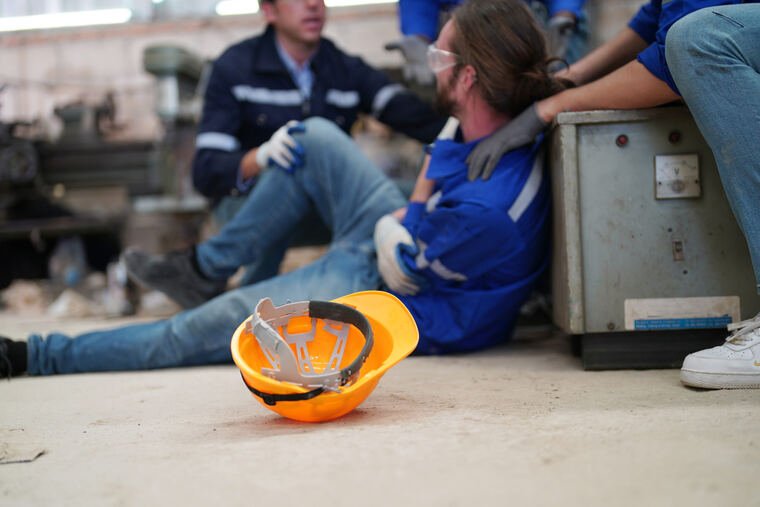
Construction is some of the most dangerous work in South Florida. A fall from a scaffold, a falling tool, a trench that was never shored, a machine that should have been locked out: any of them can put you in the hospital and out of work for months.
Most injured workers are told the same thing: file for workers comp and wait. Workers comp matters, but it is rarely the whole story. Many construction accidents also involve a negligent subcontractor, property owner, equipment manufacturer, or driver, and a separate claim against them can recover far more than workers comp alone.
At Leyva Law, attorney Daniela Leyva examines every angle of your accident, in English or Spanish, and you pay nothing unless we recover for you.
Workers Compensation: What It Pays and What It Does Not
Florida construction employers are generally required to carry workers compensation coverage under chapter 440, Florida Statutes. It is a no-fault system: you do not have to prove that anyone did anything wrong to receive benefits. Workers comp pays your authorized medical care and a portion of the wages you lose while you cannot work.
The trade-off is steep. Under section 440.11, Florida Statutes, workers compensation is generally the exclusive remedy against your employer. In plain terms, in most cases you cannot sue your own employer for negligence, even when the accident was clearly the company's fault. And workers comp pays nothing for pain and suffering.
Two deadlines start running right away. You generally must report the injury to your employer within 30 days (section 440.185, Florida Statutes), and a petition for workers compensation benefits generally must be filed within two years of the injury (section 440.19, Florida Statutes).
Third-Party Claims: Where Full Compensation Often Comes From
A construction site is crowded with companies that are not your employer. When one of them causes your injury, the exclusive remedy rule often does not protect them, though it depends on that company's role on the site. You can bring a normal negligence claim against that company for the full value of your harm, including pain and suffering, in addition to your workers comp benefits.
Negligent Subcontractors
Another trade leaves live wiring exposed, drops material from a level above, or removes a guardrail and never puts it back. The company responsible can be held accountable even though your own employer cannot.
Property Owners
Owners who keep control of the site or hide dangerous conditions on their property can be responsible for the injuries those conditions cause.
Equipment Manufacturers
Defective ladders, scaffolds, lifts, power tools, and machines without proper guards support product liability claims against the companies that made or sold them.
Negligent Drivers
Workers struck by a vehicle in a work zone, or hurt in a crash while driving between sites, usually have a claim against the at-fault driver on top of workers comp.
Who on the Site Can Actually Be Sued
Not every company on a job site is open to a lawsuit. Florida law gives some of them the same protection your employer has.
Under section 440.10(1)(b), Florida Statutes, when a contractor sublets part of the work, the employees of the contractor and of every subcontractor are treated as employed in one and the same business, and the contractor must secure compensation for all of them unless the subcontractor already has. That is why a general contractor so often claims immunity.
Another subcontractor on the same project is protected too, but only on conditions. Section 440.10(1)(e), Florida Statutes, shields it only if it secured workers compensation insurance for its own employees and its own gross negligence was not the major contributing cause of the injury. Both of those are questions of fact, and both are worth fighting about.
Equipment makers, owners who are not acting as the contractor, and outside drivers normally sit outside that protection entirely.
How the Workers Comp Claim and the Third-Party Case Fit Together
You do not have to choose between them. Section 440.39(1), Florida Statutes, lets an injured worker accept compensation benefits and at the same time pursue an action at law against a third party. The two cases run side by side.
There is a catch worth knowing before you sign anything. Once benefits are paid, the employer or its insurance company is subrogated to your rights and can place a lien on your judgment or settlement under section 440.39(3)(a), Florida Statutes. It does not take the whole amount off the top. The lien is reduced by its share of the costs and attorney fees, and if you show the court that you did not recover the full value of your damages, the carrier recovers only that same percentage of what it paid. What you keep therefore depends on how that lien is handled, which is not something to settle alone with an adjuster on the phone.
OSHA Violations Can Help Prove Your Case

Federal OSHA rules set minimum safety standards for fall protection, scaffolding, ladders, trenching, and more. An OSHA citation does not decide a civil case by itself, but a documented safety violation can be powerful evidence that someone was negligent.
We move quickly to request inspection records, citations, incident reports, and site photographs before they disappear. On an active job site, the scene of your accident may be rebuilt within days.
The Deadline to Sue Is Generally Two Years
For most construction accident negligence claims, Florida law allows two years from the date of the accident to file a lawsuit (section 95.11(5)(a), Florida Statutes). The workers comp system runs on its own clocks, described above, and insurance policies add notice requirements of their own.
Beyond the deadlines, evidence on a construction site changes daily: equipment is repaired or removed, conditions are corrected, and crews scatter to other jobs. The sooner we start, the more we can preserve. There is no cost to have us review your case.
Immigration Status and Your Right to Recover
It is the question we are asked most often, and almost never on the first call.
Florida's workers compensation law defines who counts as an employee without regard to immigration status. Section 440.02(18)(a), Florida Statutes, covers a person who is paid for work whether lawfully or unlawfully employed, and says the term includes aliens. A negligence case against a third party turns on who caused the injury, not on the papers in your wallet. We do not ask about your status to open a file.
One caution, because it is a real trap. Section 440.105(4)(b)9, Florida Statutes, makes it unlawful to knowingly present a false or misleading statement as evidence of identity in order to get a job or to support a workers compensation claim. If anything in your hiring paperwork worries you, tell a lawyer before you fill out a claim form or give a recorded statement.
Construction Accidents We Handle in Miami-Dade
- Falls From Scaffolds, Roofs, and Ladders
- Crane and Heavy Equipment Accidents
- Trench and Structure Collapses
- Electrocutions and Burns
- Falling Tools and Debris
- Forklift and Machinery Accidents
- Work Zone Vehicle Accidents
- Defective Tools and Equipment
Miami Construction Accident FAQ
Can I sue my employer after a construction accident in Florida?
Usually no. Under section 440.11, Florida Statutes, workers compensation is generally your only remedy against your own employer, even when the company was careless. But that immunity does not automatically extend to every other company on the site. If a subcontractor, property owner, equipment manufacturer, or driver played a role in your accident, you can pursue a separate negligence claim against them for the full value of your harm.
What does workers compensation actually pay?
Workers comp pays authorized medical care and a portion of your lost wages while you cannot work. It pays nothing for pain and suffering, and it does not cover the full impact of a serious injury on your life. That is why we investigate every construction accident for a third-party claim, which can cover those losses.
How long do I have to act after a construction accident?
Three clocks matter. You generally must report the injury to your employer within 30 days (section 440.185, Florida Statutes). A petition for workers compensation benefits generally must be filed within two years of the injury (section 440.19, Florida Statutes). And a negligence lawsuit against a third party generally must be filed within two years of the accident (section 95.11(5)(a), Florida Statutes). The safest move is to get advice long before any of them run out.
The accident was partly my fault. Do I still have a case?
Very likely. Workers compensation is a no-fault system, so your own mistake does not bar benefits. In a third-party negligence claim, Florida's comparative fault law (section 768.81(6), Florida Statutes) reduces your recovery by your share of the blame, and only bars it if you were more than 50 percent at fault. Do not assume you were at fault just because a supervisor or an insurance company says so.
How much does a construction accident lawyer cost?
Nothing upfront. We work on contingency: our fee is a percentage of what we recover for you. If there is no recovery, you owe no fee and no costs. The consultation is free and available in English or Spanish.
Can I be fired for filing a workers compensation claim?
No. Section 440.205, Florida Statutes, says no employer shall discharge, threaten to discharge, intimidate, or coerce any employee because of a valid claim for compensation or an attempt to claim it. If it happens anyway, write down the date and what was said, and keep any text messages. It is a separate problem for the employer, and it does not cancel your injury claim.
My employer has no workers compensation insurance. Can I sue?
Yes, that is one of the two exceptions. In construction, Florida requires coverage from the first employee, not the fourth (section 440.02(20)(b)2, Florida Statutes). If your employer failed to secure it, section 440.11(1)(a), Florida Statutes, lets you elect to claim compensation or to sue for damages, and in that suit the employer cannot blame a coworker, argue you assumed the risk, or argue your own comparative negligence. The other exception, an intentional tort under section 440.11(1)(b), Florida Statutes, requires clear and convincing proof and is rare.
If I recover from a third party, does workers comp get paid back?
Often part of it, not all of it. Under section 440.39(3)(a), Florida Statutes, the employer or its insurance company can claim a lien on the recovery, reduced by its share of the costs and attorney fees. If you show that you did not recover the full value of your damages, its share drops to the same percentage that your net recovery bears to the full value. How that number is argued can change your take home amount a great deal.
Sources
- Section 440.11, Florida Statutes (exclusiveness of liability, and the exceptions for an employer that fails to secure coverage or commits an intentional tort): official text. "The liability of an employer prescribed in s. 440.10 shall be exclusive and in place of all other liability, including vicarious liability"
- Section 440.10, Florida Statutes (a contractor must secure coverage for subcontractor crews, and when a fellow subcontractor is protected): official text. "The subcontractor's own gross negligence was not the major contributing cause of the injury."
- Section 440.39, Florida Statutes (both claims at once, and the workers compensation lien on a third-party recovery): official text. "may accept compensation benefits under the provisions of this law, and at the same time ... may pursue his or her remedy by action at law"
- Section 440.185, Florida Statutes (notice of injury to the employer): official text. "shall advise his or her employer of the injury within 30 days after the date of or initial manifestation of the injury"
- Section 440.19, Florida Statutes (deadline to file a petition for benefits): official text. "the petition is filed within 2 years after the date on which the employee knew or should have known"
- Section 440.02, Florida Statutes (definitions: who is an employee, and construction coverage from the first employee): official text. "whether lawfully or unlawfully employed, and includes, but is not limited to, aliens and minors"
- Section 440.205, Florida Statutes (no discharge or coercion for claiming compensation): official text. "No employer shall discharge, threaten to discharge, intimidate, or coerce any employee by reason of such employee's valid claim for compensation"
- Section 440.105, Florida Statutes (false statements offered as evidence of identity): official text. "To knowingly present or cause to be presented any false, fraudulent, or misleading oral or written statement to any person as evidence of identity"
- Section 95.11, Florida Statutes (two year limitations period for negligence): official text. "An action founded on negligence."
- Section 768.81, Florida Statutes (comparative fault): official text. "any party found to be greater than 50 percent at fault for his or her own harm may not recover any damages"
Related: premises liability · slip and fall injuries · brain injuries. This page is general information, not legal advice, and does not create an attorney-client relationship. Prior results do not guarantee a similar outcome.
Talk to a Miami Construction Accident Lawyer Today
Free case evaluation, no obligation, no fees or costs unless we win. English or Spanish.
Office hours
Monday to Friday, 9:00 am to 6:00 pm
Weekends by appointment
Email & fax
info [at] leyva-law.com
Fax (786) 422-1365
Mailing address
9555 SW 175 Terrace #4016
Palmetto Bay, FL 33157
By appointment only