
Personal Injury
Miami Slip and Fall Lawyer
A wet floor, a broken step, or a dark stairwell can put you in the emergency room in a heartbeat. The business will rarely admit anything, and its insurance company moves fast to close the file. We represent people injured in falls across South Florida, and we know how to build the proof Florida law demands.
- No fees or costs unless we win
- Free case evaluation
- Se habla Español
Falls Are Serious Cases, and the Insurance Company Knows It
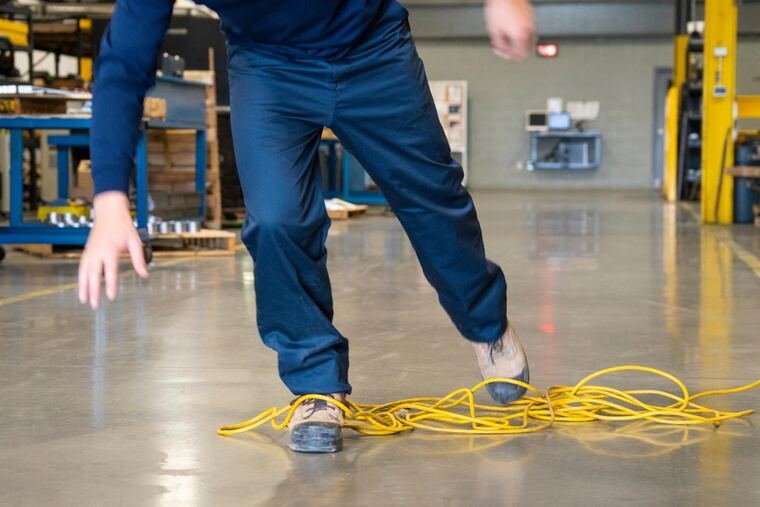
People joke about slip and fall cases until it happens to them. Falls cause broken hips and wrists, torn shoulders, back injuries, and head trauma that can take months of treatment and change how you live and work.
Florida law does give injured customers a path to compensation, but it is a demanding one, and the business's insurance company knows every shortcut to a denial. At Leyva Law, attorney Daniela Leyva handles your case personally, moves early to lock down the evidence, and prepares every claim as if it will be tried. You pay nothing unless we recover for you.
What Florida Law Makes You Prove
If you slipped on a transitory foreign substance, meaning something spilled or tracked onto the floor of a business, section 768.0755, Florida Statutes, requires you to prove the business had actual or constructive knowledge of the dangerous condition and should have fixed it.
Actual knowledge means an employee knew about the hazard. Constructive knowledge can be shown with circumstantial evidence: the substance was on the floor long enough that ordinary care should have discovered it, or the same condition happened with such regularity that it was foreseeable.
In real cases, that looks like dirty cart tracks running through a spill, a puddle that had spread wide, melted ice, or a cooler that had been leaking for weeks. This is why evidence matters more in fall cases than in almost any other injury claim, and why the first days are so important.
Not Every Fall Is a Spill Case
Section 768.0755 covers one specific situation: a slip on a transitory foreign substance inside a business. Rainwater tracked through an entrance, a dropped grape, cooking grease, a leaking freezer case. Plenty of Miami falls are nothing like that.
If you tripped on a broken step, a raised sidewalk slab, a missing handrail, a curled floor mat, a parking lot pothole, or a dark stairwell, the transitory substance test generally does not control. Those are structural or ongoing conditions, and the statute itself says it does not affect the common law duty of care owed by whoever possesses or controls the premises.
The difference changes what has to be proven. Instead of how long a puddle sat on the tile, the question is generally whether the property was kept in a reasonably safe condition and whether the owner knew or should have known. Maintenance records, work orders, prior complaints, and repair invoices become the evidence that matters.
What to Do After a Fall

1. Report It and Ask for an Incident Report
Tell a manager what happened before you leave if you can, and ask that an incident report be created. Get the manager's name.
2. Photograph the Scene Before It Changes
Take photos or video of what made you fall, the surrounding area, and any warning signs (or the absence of them). Cleanup crews arrive fast.
3. Get Names of Witnesses and Employees
A neutral witness who saw the hazard before your fall can be the strongest evidence of how long it was there.
4. Keep Your Shoes and Clothing
Do not wash or discard them. The defense often blames the customer's footwear, and the actual shoes can answer that argument.
5. See a Doctor and Follow Through
Get examined promptly, even if you think you can walk it off. Gaps in treatment are used to argue you were not really hurt.
6. Ask a Lawyer to Send a Video Preservation Letter
Most businesses have cameras, and many systems record over old footage quickly. A preservation letter demands that the video of your fall be saved before it disappears.
What if They Say the Fall Was Your Fault
Expect it. The defense playbook says you should have watched where you were walking, your shoes were wrong, or you were looking at your phone. Florida's comparative fault law (section 768.81(6), Florida Statutes) reduces your recovery by your percentage of fault, and bars it entirely only if you were more than 50 percent at fault.
These arguments are predictable, and they can be answered with evidence: the video, the photos, the witnesses, and the store's own inspection logs. We do not let the insurance company's version of your fall go unchallenged.
You Generally Have Two Years to File
For falls after March 24, 2023, Florida's negligence deadline is generally two years (section 95.11(5)(a), Florida Statutes, as amended by House Bill 837). Falls before that date are usually governed by the older four-year deadline.
The practical deadline is much shorter. Surveillance video gets recorded over, the hazard gets fixed, and witnesses move on. The sooner we start, the stronger your case. The consultation costs nothing.
Falls on Government Property Have Their Own Deadline
A fall at a county bus stop, a Metrorail station, a public school, a city park, or a public hospital is not handled like a fall at a supermarket. Section 768.28, Florida Statutes, waives the government's immunity, but only on the terms the statute sets.
Before any lawsuit, the claim generally has to be presented in writing to the responsible agency and, except for claims against a municipality or a county, to the Florida Department of Financial Services as well, generally within 3 years of when the claim accrues. The agency then has to deny it in writing, and if it does nothing for six months the claim is generally treated as denied.
The statute also caps what a government body pays: generally $200,000 to any one person and $300,000 for everyone hurt in the same incident, with more payable only by a separate act of the Legislature. If your fall happened on public property, say so on the first phone call.
Who Pays the Medical Bills While the Case Is Open
A fall is not a car crash, and that catches people off guard. Personal injury protection, the no fault coverage on a Florida auto policy, generally applies to motor vehicle crashes, not to a fall inside a store. The bills start arriving long before any settlement does.
In most cases the treatment goes through your own health insurance, Medicare, or Medicaid first. Some businesses also carry a small medical payments coverage that pays a few thousand dollars regardless of fault, so it is worth asking whether the policy has one. If you have no coverage at all, some doctors will treat under a letter of protection and wait to be paid out of the case.
None of that is free money. Each route generally creates a lien or a repayment right that has to be resolved before you receive your share, and those amounts are often negotiable.
Fall Cases We Handle in Miami-Dade
- Supermarket and Grocery Store Falls
- Restaurant and Cafeteria Spills
- Big Box and Retail Store Falls
- Parking Lot and Sidewalk Hazards
- Stairway and Handrail Failures
- Apartment and Condo Common Areas
- Hotel and Resort Accidents
- Poor Lighting and Uneven Flooring
Miami Slip and Fall FAQ
What do I have to prove to win a slip and fall case in Florida?
For a fall caused by something spilled or tracked onto a business's floor, section 768.0755, Florida Statutes, requires proof that the business had actual or constructive knowledge of the danger. In practice, that means showing the substance was on the floor long enough that employees should have found it, or that the same hazard happened so regularly it was foreseeable. Evidence like video, photos, and witness accounts makes or breaks that showing.
I did not report my fall to the store. Do I still have a case?
Possibly. A prompt report and an incident report make a case stronger, but they are not legal requirements. Video footage, receipts, phone records, witnesses, and your medical records can still establish what happened. Talk to a lawyer before you assume it is too late, and before the store's video of your fall is recorded over.
The store says the fall was my own fault. Is my case over?
No. Under Florida's comparative fault law (section 768.81(6), Florida Statutes), your recovery is reduced by your percentage of fault, and you are only barred from recovering if you were more than 50 percent at fault. Blaming the customer is a standard defense tactic, and it can be answered with evidence.
How long do I have to file a slip and fall lawsuit in Florida?
For falls after March 24, 2023, you generally have two years to file a negligence lawsuit (section 95.11(5)(a), Florida Statutes). Falls before that date are usually governed by the older four-year deadline. Waiting costs evidence either way: many surveillance systems record over their footage within days or weeks.
How much does a slip and fall lawyer cost?
Nothing upfront. We work on contingency, so our fee comes out of the recovery, not your pocket. If there is no recovery, you owe no fee and no costs. The consultation is free and available in English or Spanish.
How long does a store keep the video of my fall?
Often not long. Many retail systems overwrite footage on a loop measured in days or a few weeks. Nothing requires a business to preserve video before someone asks it to. That is why a written preservation letter should go out in the first days, not after treatment ends.
The hazard was in plain sight. Does that end my claim?
Not by itself. Florida law generally treats an obvious danger as something that can reduce a property owner's duty to warn, but it does not erase the separate duty to keep the premises reasonably safe. In practice it usually becomes a comparative fault argument under section 768.81(6), Florida Statutes, which reduces the recovery by your percentage of fault rather than ending the case, unless you were more than 50 percent at fault.
I fell in my apartment building. Who is responsible?
It depends on who controlled the area. Stairwells, walkways, garages, laundry rooms, and pool decks are generally the landlord's or the association's responsibility, and the claim usually goes to their liability coverage. Prior complaints matter here more than almost anywhere else. A burned out light or a loose handrail that neighbors reported for months is strong proof the owner knew.
Sources
- Section 768.0755, Florida Statutes (premises liability for transitory foreign substances in a business establishment): official text. "the injured person must prove that the business establishment had actual or constructive knowledge of the dangerous condition"
- Section 768.81(6), Florida Statutes (modified comparative fault): official text. "any party found to be greater than 50 percent at fault for his or her own harm may not recover any damages"
- Section 95.11(5)(a), Florida Statutes (two year deadline to sue for negligence): official text. "WITHIN TWO YEARS ... An action founded on negligence."
- Section 768.28, Florida Statutes (waiver of sovereign immunity, written notice and recovery limits): official text. "An action may not be instituted on a claim against the state ... unless the claimant presents the claim in writing to the appropriate agency"
Related: premises liability · brain injuries · construction accidents. This page is general information, not legal advice, and does not create an attorney-client relationship. Prior results do not guarantee a similar outcome.
Talk to a Miami Slip and Fall Lawyer Today
Free case evaluation, no obligation, no fees or costs unless we win. English or Spanish.
Office hours
Monday to Friday, 9:00 am to 6:00 pm
Weekends by appointment
Email & fax
info [at] leyva-law.com
Fax (786) 422-1365
Mailing address
9555 SW 175 Terrace #4016
Palmetto Bay, FL 33157
By appointment only